At a time when the Luton Local Tribunal and the military authorities were deadlocked over conditional exemption cases being automatically taken to the Appeals Tribunal, the death was reported of Pte Ernest Wright [A/311952, Army Service Corps], a 22-year-old Lutonian whose medical condition should have debarred him from service. But the military Medical Board at Bedford had overruled medical opinion in Luton. The following moving report appeared in The Luton News on Thursday, March 1st, 1917.
Digest of stories from The Luton News: Thursday, February 22nd, 1917.
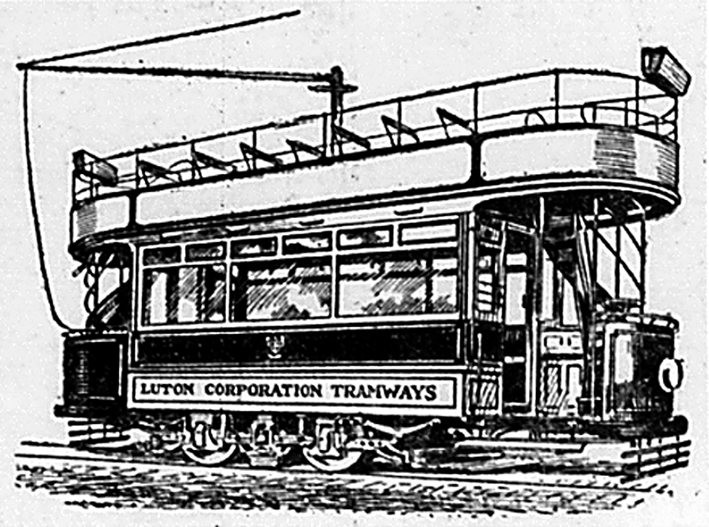
Another alarming tram accident occurred at about 7.30 on Monday morning on the Dunstable Road route. It was a serious accident for, although there was no severe personal injuries, the damage to one of the cars was very great.
At half past six o'clock last evening [February 21st, 1917] the Luton Borough Tribunal came to a startling decision. It transpired that Lieut Gardner purposed taking every case where conditional exemption was granted by the local Tribunal to men under 31 years of age to the Appeal Tribunal, and the question promptly arose: "What then is the locus standi of the local Tribunal?"
Pte Albert Carrington, serving with the Cheshire Regiment, described himself as "an old Luton milkman" when he sent a poem home to 2 South Road, Luton. Of his dear old shanty bivouac in which he was living on the Western Front, he wrote:
Digest of stories from the Beds & Herts Saturday Telegraph: February 17th, 1917.
Lutonians will learn with pleasure that Co-QMS Arthur Andrews, of the Highland Light infantry and Luton's double D.C.M., has been given a further honour in the shape of a commission in that regiment, although he is attached to the Northumberland Fusiliers.
Not precisely the Romeo and Juliet script, but a tragically moving story nonetheless of two young Luton sweethearts in World War One.
Jack Copley was a Yorkshire lad who came to live in Luton with his father in Old Bedford Road. Here he met 18-year-old Elsie Ritchie, a girl very much in love with him.
Former Luton Post Office telegraphist Sapper Henry Bennett, 149115, Motor Airline Service [communications] Royal Engineers, was in East Africa in 1916-17. He had joined up in January 1916. His wife Daisy and young son Daniel Henry (born November 30th, 1914) lived at 78 Russell Rise, Luton. Henry (pictured below) had worked at the Post Office since 1906 and had married Daisy at the Ebenezer Baptist Church, Luton, on March 11th, 1912.
Digest of stories from the Beds & Herts Saturday Telegraph: February 10th, 1917.
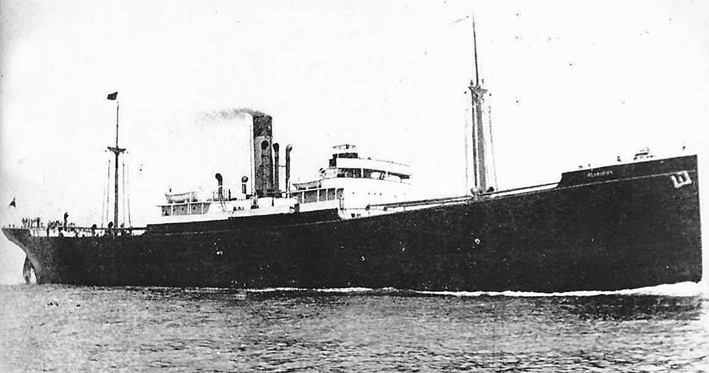
German submarines were posing an increasing threat to Britain's food supplies as World War One progressed. In an article headlined "Home weapons - spade, fork and hoe to counter submarines" the Saturday Telegraph said it would not be inappropriate if the men of Luton retained their present enthusiasm for husbandry to produce home-grown food.
Writing to his parents, Mr and Mrs J. J. Wooding, of Havelock Road, Luton, Cpl W. H. Wooding, who is with a Signal Company of the Royal Engineers in Egypt, gives a vivid description of a night ride in the desert. He says:
Digest of stories from The Luton News: Thursday, February 8th, 1917.
Prosecutions for drunkenness in Luton in the past year totalled 46 (32 males and 14 females) - the lowest number on record, according to Acting Chief Constable W. J. Hagley's annual report to the local Licensing Sessions yesterday. Of those, 43 were convicted and three discharged.
Digest of stories from the Beds & Herts Saturday Telegraph: January 27th, 1917.
Important conferences in connection with the control of the licensed trade in Luton and district were held at the Town Hall, Luton, yesterday. Delegates included members of the Central Control (Liquor) Board, members of local authorities, industry, trade unionists and the police.