

Digest of stories from The Luton News: Thursday, February 1st, 1917.

- Luton Town FC's last pre-war team, eight of whom joined the Footballers' Battalion.
Cpl Arthur Harold Wileman and L-Cpl Arthur Roe, the Luton Town footballers who went out to France with a draft two or three months ago, are now with the Royal Sussex Regiment.
In a letter to Mr Charles Green, the Hon Secretary of the Town Club, Arthur Wileman writes: "The conditions out here are very bad. It is too cold to write. We have about six inches of snow, and we are on our 24 days in the line. I shall be very glad when we get out to have a bath - that is if we are lucky enough to get one.
"I see the Town are winning one or two matches. That was a very good win over Chelsea, and I should have liked to have been in at that. Also glad to see old Hughie Roberts is all right, and I hope he keeps so.
"We had a football match the other week while we were out in the trenches. 'A' Company challenged us, and did not know that Roe and I were footballers, so our chaps took them on. It was up to the neck in sludge, even worse than the Welsh grounds!
"Well, we finished winning by 10 goals to nil. Roe got five and I got five, so the other side began to make inquiries who we were. Now the battalion have challenged our company when we come out again."
"We must not grumble as long as we are in good health out here, although it is very, very cold," concludes the letter.
-
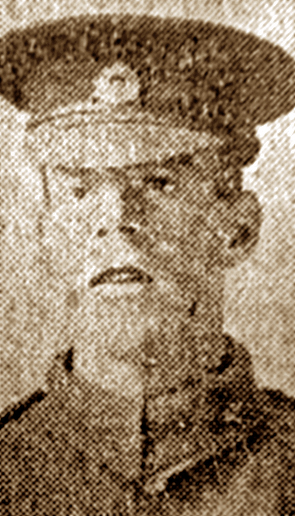 Pte Bert Silsbey (pictured right), of 104 Ashburnham Road, Luton, has been awarded the Military Medal and mentioned in despatches and commended for his "gallant conduct and devotion to duty" on the field at Fricourt on January 18th, 1916, by Major-General Maxse, commanding the 18th Division. The old bot of Christ Church School and two of his chums had volunteered to rescue comrades caught in a sap and rendered unconscious by gas generated by a mine explosion. He also helped to hold a trench that was hard pressed by the enemy, after being gassed themselves
 -
The Directors of the Luton Permanent Building Society, in their 50th annual report, drew the attention of shareholders and others seeking investments to the continuously improving and sound financial position of the Society, as shown by the statement of accounts. They had pleasure in stating that the past year had produced a large influx of new members, and that a bonus of 6d in the £ would be added to all shareholders' books in respect of hares which had been in existence for three years.
-
Early on Monday morning, as Mrs Saunders, a Luton postwoman, of Wellington Street, was completing her delivery round in Grove Road, she stepped on a coal cellar grating which was insecure. One side of the grating shot up and Mrs Saunders fell partly through. She was rescued by two passers-by and managed to proceed home.
-
The 23rd annual meeting of the South Beds Golf Club, held at the Town Hall on Monday evening, heard that accounts for the year showed a surplus of £47 12s, and it was explained that this was the result of an influx of 23 new members.
-
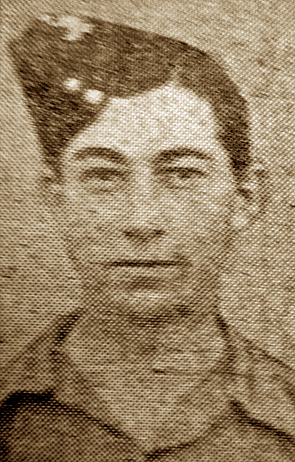 After he had voluntarily enlisted on August 29th, 1915, the Luton Recruiting Authorities are still undecided as to whether or not they have "got" No 2196 Gnr John Kenrick Woollard. A letter from his parents at 57 Lyndhurst Road, Luton, said they had received an official notice and the police had been sent round twice within the last two months to "fetch" him. To remove doubt, they included the picture (right) of Gnr Woollard taken in uniform in India en route for Mesopotamia "where he is now doing his bit with the 222nd Brigade, Royal Field Artillery.
 -
At the instigation of the Luton Adult School and the Board of Guardians, the Mayor (Alderman J.H. Staddon) convened a conference at the Town Hall on Wednesday afternoon which accepted the principle of a Guild of Help being established in the town. The Guardians suggested that the Guild's objects should be the saving of child life; the provision of a creche for about 40 children; the prevention of consumption, venereal disease and prostitution; preventative and rescue work among young women; the after-care of girls; and after-care of prisoners, soldiers' and sailors' families etc. The Adult School saw a Guild co-ordinating the various authorities whose work included philanthropic and social effort to avoid waste of time and effort and creating a more efficient system.