Research in Belgium into the liberation of the little village of Ledegem in the final days of World War 1 has uncovered a fascinating story of a dying German soldier and a then unknown British soldier who eventually turned out to be from Luton.
On October 14th, 1918, the British soldier took the dying man's pocket book and other possessions in the hope of returning them to his family. Unfortunately, although the German soldier's name was known to be Rutz, there was no address to which to return the items.
Stories from The Luton News: Thursday, August 10th, 1916.
Although around 800 mothers of serving soldiers were afforded an opportunity of visiting Luton Hoo at the invitation of Lady Wernher to view its gardens and conservatories, many more were left disappointed that planned transport arrangements did not materialise.
With a view to its submission to the military authorities, evidence was taken at the Luton Borough Tribunal on Thursday evening [August 3rd, 1916] with respect to a case which the Mayor, Alderman J. H. Staddon (picture by Frederick Thurston), described as a scandal.
It concerned an ex-tramway motorman - married to a "war widow" with one child, whose previous husband was killed at Hill 60 - who walked into the Council Chamber with a very pronounced limp, which he assured the Tribunal was "not more so than usual".
An early example of hardships that could await many men who returned wounded from the Front was contained in a letter in The Luton News (August 3rd, 1916) signed "F. J. W. L. (Late Bedfordshire Regiment)". He wrote:
I wish to draw your attention as to how I have been treated since being discharged from the Army. I was wounded at Gallipoli, and have been discharged six months.
Stories from The Luton News: Thursday, August 3rd, 1916.
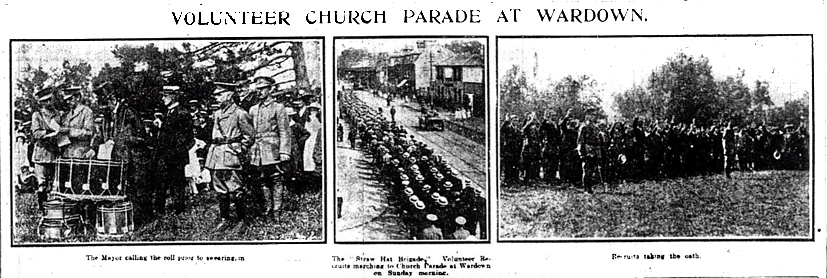
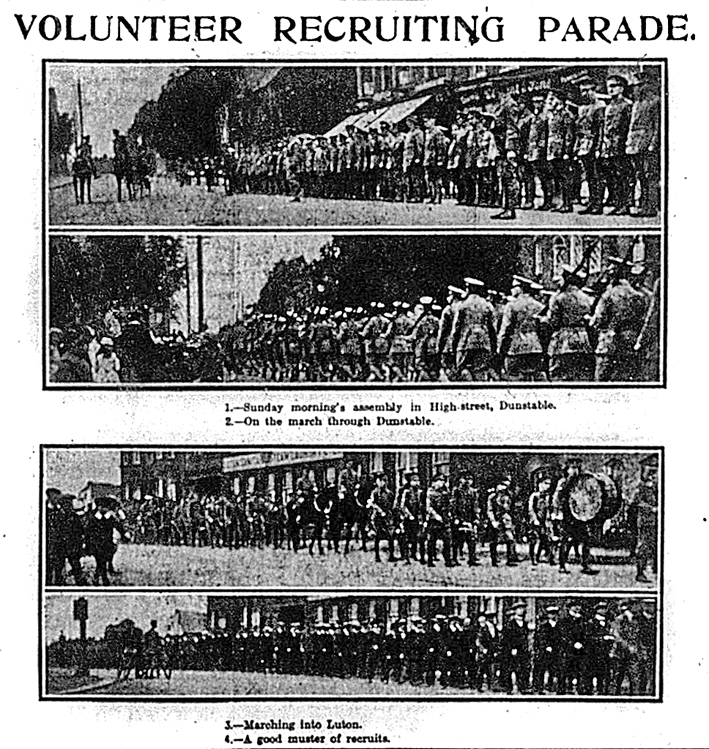
The grand finale of the recruiting week in connection with the Luton Volunteer Corps took place on Sunday. In the morning there was a parade in Wardown Park, followed by a service conducted by the Rev C. Evelyn Charlesworth, and then by the swearing in of the new recruits by the Mayor.
L-Cpl Fred Goode, of the 2/6th Royal Sussex Regiment, Cornwallis Barracks, Bangalore, writing on July 19th [1916] describes their march to Mysore. He is the son of Mr Charles Goode, of 140 North Street, Luton.
Pte Ralph Eastaff, Royal Army Medical Corps, now with the Indian Expeditionary Force, wrote to his mother Sarah at Collinwood, 47 Reginald Street, Luton, about his journey out East from Aldershot.
Stories from the Beds & Herts Saturday Telegraph: July 29th, 1916.
Wearing sackcloth and ashes rather than shouting from public platforms was how the Mayor of Luton, Alderman J. H. Staddon, suggested that the second anniversary of the outbreak of war should be marked.
The story of a Samaritan German prisoner was revealed in a letter from a Bedfordshire man who had been wounded twice on the Somme battlefield. The Luton News told the story in its August 3rd, 1916, edition.
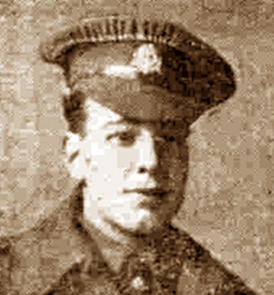
Pte Sidney Folds (pictured), 19347, Bedfordshire Regiment, son of Vince and Sarah Ann Folds, of Breachwood Green, was an inmate of the V.A.D. Hospital, Quarry Place, Shrewsbury, as a result of leg wounds.
More concerns were raised at the Luton Tribunal on July 24th, 1916, over the thoroughness of medical examinations by the military and of men who were unfit being called up. Instances cited included a man with five children who was himself "deaf as a beetle" and another man who had a wooden leg.
Stories from the Beds & Herts Saturday Telegraph: July 22nd 1916.
The proceedings at the Luton Tribunal on Thursday evening were of an unusually lively character. Some time since, a man who claims to be a "missionary for God" was granted absolute exemption as a conscientious objector.
Sgt Albert Hugh Wingrave, son of a Luton hat manufacturer, was awarded the Military Medal for gallantry while serving in Flanders with the No 2 Signals Section, 108636 Canadian Engineers, 3rd Canadian Contingent.
Stories from The Luton News: Thursday, July 20th, 1916.
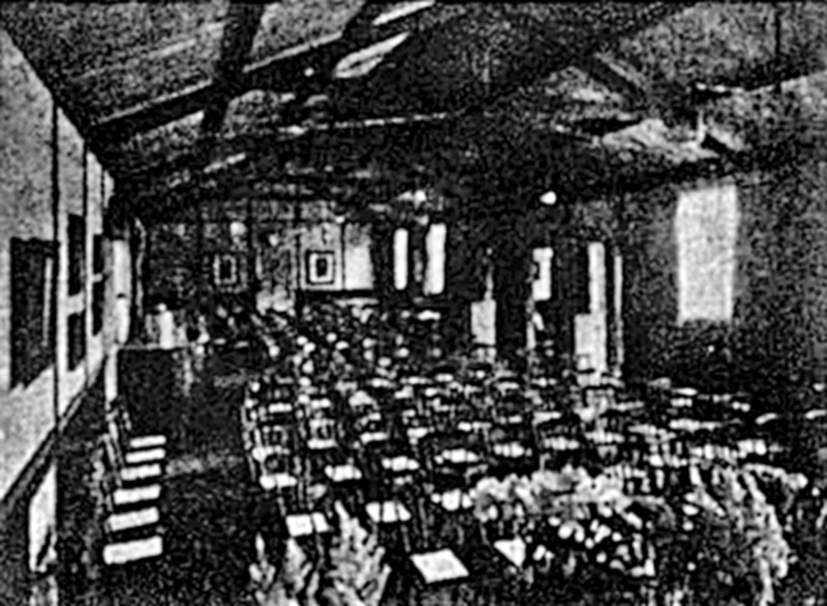
With 12,000 munition workers - mostly women and girls - in Luton, the official opening by Lady Wernher, of Luton Hoo, of a YWCA hut in Upper George Street for their leisure time was warmly welcomed.