

Just days before Christmas 1918, Lieut John Crawford Cunningham, of 35 Cardiff Road, Luton, arrived home after spending some months in Germany as a prisoner of war and being involved in a World War One equivalent of the Great Escape of WW2.
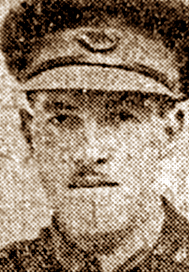 He had been captured at St Quentin on March 21st at the opening of the German spring offensive of 1918. He was interned for most of the time at Holzminden in Germany, the officers' camp from which officers escaped by means of a tunnel in July 1918.
Reporting his return home, The Luton News of December 26th, 1918, said: “Lieut Cunningham actually helped in the digging of this tunnel, which took nine months to complete. But as he had not been in the camp so long as most of the others, his name was rather low on the list of those who were to attempt the escape.”
Unfortunately, Lieut Cunningham was still in the camp when the tunnel collapsed as the 30th man was passing through. Had the mishap not occurred, he said, the whole lot of them would have got away.
For the first two months after capture, Lieut Cunningham (pictured) said the prisoners had a bad time when no parcels were arriving from England and the German food was not fit to eat. In fact, had they had to depend on German food they would not have survived.
When parcels finally reached them from home they got on fairly well – until the Germans discovered the flight of the 29 officers and the tunnel.
“Then they imposed a more vigorous discipline upon the camp,” he said. “They stopped such pleasures as games, theatrical performances, gramophone playing, etc, which the prisoners had up to then enjoyed. They also held several roll calls daily.”
The lieutenant said that when the armistice was signed all the prisoners broke camp. Two hundred or more set off with the intention of walking to the border, and then procuring a passage home. He, with three others, was out four days and visited Hanover and other places, eventually reaching Holland. He sailed home from Rotterdam and had a great reception on disembarking at Hull.
Soon after arriving back in Luton, Lieut Cunningham visited his old school - Dunstable Road - to show pupils some of the souvenirs he had brought back from Germany. They included the German flag that had been flying over the prison where he was held captive. Other items included his field glasses which had been damaged by a shell splinter, some German glasses with a piece of shell obstructing the view of one lens, German revolvers, hand grenades, helmet, belt, combined purse and tobacco pouch, an automatic pistol and fuzes.
He also recalled that he was in a prison camp at Ruhleben when that town was bombed by Allied airmen, an event which caused the prisoners to turn out and cheer.