

Digest of stories from The Luton News: Thursday, June 20th, 1918.
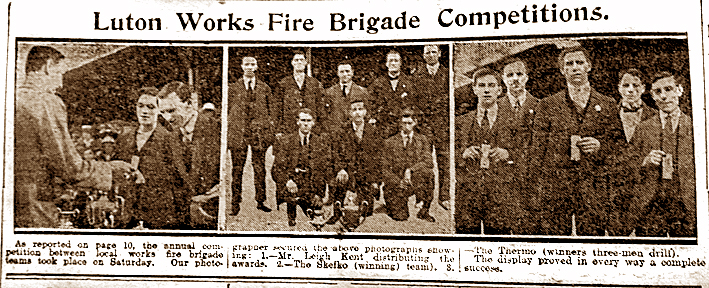
The interest felt in the fire brigade institutions at the local works was demonstrated on Saturday by the very successful competitive afternoon arranged by the Luton & District Private Fire Brigades Association.
Last year the competition was held more or less privately, but the active membership has so increased that it was found possible this year to throw open the display and divide the proceeds between Wardown Hospital and St Dunstan's.
There was a large and enthusiastic crowd on the Football Ground, and although the weather before the competition was threatening, it proved most favourable for the rest of the day. The supporters of the various works brigades made their presence felt, and the competitions were marked by considerable enthusiasm. The orchestra from Biscot Road Works, strengthened by Royal Field Artillery musicians, played excellently at intervals.
Eight teams competed, the challenge cup being won again on the aggregate time by the Skefko. The trophy for the neatest drill went to the Diamond Foundry team. The prizes were distributed by Mr Leigh Kent.
-
Two Lutonians during the past week ot two have received Army commissions. Mr Alec Plummer, younger son of Mr F. W. Plummer, of Rookwood, New Bedford Road, has been gazetted a second lieutenant in the Royal Engineers, stationed at Haynes Park. A commission has also been bestowed on Mr Frank W. Jeffs, son of Mr W. G. Jeffs, of 99 Wellington Street. He has now been attached to the King's Royal Rifle Corps as a second lieutenant in this country prior to returning to France.
-
A special supplement of the Gazette on Monday contained a lengthy list of awards of the Meritorious Service Medal to NCOs and men for valuable service with the forces. Among the names is that of Staff-Sgt W. J. Twidell (R.A.M.C.), son of Mr T. J. Twidell, licensed victualler, of 80 Cardigan Street. He has been on the headquarters staff in France, as confidential clerk to Sir Arthur Sloggett, the late Director-General of Medical Services. Other names appearing in the list are Farrier-Sgt A. W. Turner, R.F.A. (Luton); Company Quartermaster-Sgt S. Burgess, A.S.C. (Luton); Staff-Sgt P. Best, A.O.C. (Luton), Quartermaster-Sgt A. Ellis, R.A.M.C. (Luton); and Staff-Sgt A. Harris, A.S.C. (Luton).
-
Mr A. Groom, of 52 Lea Road, Luton, has received an interesting letter from his son Bert, who has just had the pleasant experience of meeting in France his three brothers, none of whom he had seen for many months. He wrote that he had found John again and took him to see Albert, who in turn took them to see Stan. “I think we were very lucky, for the very next day we had to shift, so now me and John are over 50 miles away from Albert and Stan,” wrote Bert.
-
Arrangements are proceeding rapidly for the visit of the famous Tank bank 'Julian' to Luton for the week commencing July 8th. Mr G. E. M. Walker, Hon Secretary of the War Savings Committee, said Luton's target should be a minimum of £500,000 - less than the £10 per head of the population, which is officially set at 59,000. It was pointed out that Luton had been a long way below quota of £29,000 per week in the sale of War Bonds. Indeed, the town's arrears in this respect amount to over £1 million. It remains to be seen how far the deficit can be wiped off.
-
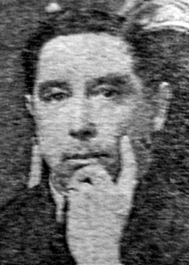 The news has fallen upon Christ Church parish with great suddenness that the Vicar, theRev Canon C. Morgan Smith (pictured right), has accepted the living of Stevenage Rectory offered him by the Bishop of St Albans. An announcement in The Times said he would be instituted at Stevenage on October 12th. He will relinquish his present vicariate exactly 12 years to the day on which he entered it.
 -
Dr W. J. Cox, the Acting School Medical Officer for Luton, in his report for 1917 states that at the routine inspection only about two in 100 children were found with dirty or verminous bodies. But when the nurse paid surprise visits this number rose considerably, there being five per cent in the cleanest school to 60 per cent in the worst schools. “The verminous problem in the schools is a serious one,” wrote Dr Cox. “The root of the evil is the dirty home, and until this is remedied school children will continually present themselves at school in a verminous condition.” He advocated that a bath should be put in each house to lessen the evil.
-
The Gasworks Path from Crawley Road to Francis Street/Dunstable Road was re-opened on Tuesday and, although not everybody accustomed to using it in the pre-war days yet knows about it, a considerable number of people have found it convenient.
-
A striking achievement by the congregation of King Street Congregational Church during the past few days is worthy of placing on record. For some years past there has been a gradually increasing debt on various funds of the church, amounting in all to about £700. The pastor, the Rev E. B. Mahon, made a strong plea from the pulpit on June 5th, when he said he would be in the vestry from 8am to 8pm. He said he required £1 per minute to clear the debt, and the venture succeeded beyond expectation. No less a sum than £811 was realised at the end of the day.
-
A rather serious fire occurred last night at East Hyde in an outbuilding of the Leather Bottle public house, owned by J. W. Green Ltd and tenanted by Mr J. H. Greenway. The wooden building with a slate roof was used as a scullery and store. The fire broke out about 10 o'clock and the building was soon blazing furiously. The walls were burnt away and the roof fell in. This was the first fire at which Luton's new motor engine was used.
-
On Monday afternoon, George Hughes was driving the largest lorry possessed by motor engineers B. E. Barrett Ltd, Langley Garage, Union Street, from London to Luton. The four-ton vehicle was loaded to its capacity with straw plait consigned to various Luton firms when, about two miles from Harpenden, a passing cyclist hailed the driver and acquainted him with the fact that smoke was issuing from the sides of the lorry. A quantity of plait was removed when suddenly flames shot up from the centre of the load in a blaze which continued to burn for over an hour, reducing the chassis to a charred heap of scrap iron. Mr Barrett and his man have no idea how the fire originated, except the theory of spontaneous combustion.