


- Master, Matron and staff of the Luton Workhouse, 1914.
Members of the Luton Board of Guardians waxed a bit warm over a discussion which arose in their meeting on Thursday on the subject of the increase of the Matron's salary. At the previous meeting there was a majority of 13 to 9 in favour of a proposal of the Finance Committee to increase the salary of the Master from £125 to £150, and that of the Matron from £75 to £85 per annum, and to discontinue the payment to them of commission on account of monies received from the military.
On Thursday, Mr J. T. Lee, as Chairman of the Finance Committee, had a notice of motion on the agenda to ratify this decision. In the ordinary course this would have been a mere formality, but in the meantime a letter had been received from the Matron [Mrs Richmond] in which she intimated that she regarded the increase granted to her after 14 years as inadequate, and her salary was not in proportion to her duties and responsibilities having regard to the increased cost of clothing etc, the general rise in salaries and the strenuous character of the work and the hours she had to put in.
Mrs Richmond pointed out pointed out that the ceaseless calls of the position admitted of very little social life or outside interests, and what little leisure time there was indoors had to be spent in a room where the sun never shone and the only outlook was a brick wall.
She stated that the women's section of the indoor service of the poor law was notoriously underpaid. During the time she had been at Luton there had been a great deal of work in connection with rebuilding and reorganisation, which could by no means be considered her normal duties but for which she never received any monetary recognition. Any highly salaried male official was invariably spontaneously remunerated for extra services, whereas a woman's normal duties were seldom, if ever, properly paid for, and extra work never.
"A very sensible letter," was the comment of the Chairman (Mr J. A. Burgess) when it was read, although he went on to say that while there were things in it with which he agreed there were others with which he could not agree.
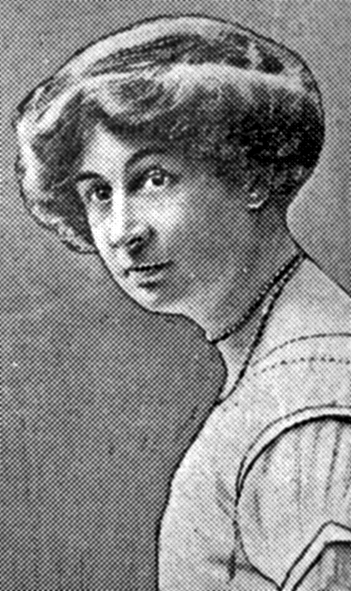 Mrs Violet Lewis (pictured right), on the other hand, was quite unqualified in endorsing it as a perfectly sensible letter, and added that it was a shame the proposed increase was ever put at such a figure as it was. Mr Lee was with the Chairman in his sentiments, but argued that the Board could not deal with the letter on that occasion, and therefore submitted the resolution of which notice had been given.
No one showed any disposition to second it until Mr W. J. Primett did so with the intimation that he took this step merely to get it before the Board, as he should not vote for it, and the Vice Chairman, Mr Henry Impey, then came forward with a suggestion which he thought would enable the Board to be unanimous on the question.
At the last meeting, he said, the idea of some seemed to be that consideration should be had to the fact that the Master's son was helping in the work of the institution, and his view of the fact that was that the better plan would have been to increase the salaries as proposed and pay the lad for what he did. He thought the proper course was to pay anybody and everybody for the work they did, but he understood the Master had said he did not want any payment for the lad and, if that was the case and the Clerk ruled that it could be done without giving notice to rescind the resolution passed by the Board at the last meeting, he suggested they might by a unanimous understanding increase the Matron's salary to £90 instead of by £10 as first suggested.
An amendment was straight away moved by Mrs Lewis to refer the matter back to the committee, and incidentally she expressed the view that it should go to some other committee than the Finance Committee, as there were no women on the committee dealing with the matter.
Mr J. Bone's plan for dealing with the matter was to give the lad £5 for the services he had rendered, and then have the matter brought up again in two or three months, and the Matron's salary increased without any necessity for rescinding the previous resolution, his plea being that it was very humiliating and annoying to the Master and Matron to have the matter discussed at great lengths and the newspapers making a lot of it, besides not being to the dignity of the Board.
Mr R. Sear, however, seconded the amendment, maintaining that there was no application for any recompense or remuneration of the boy, and there fore the Board should deal with the Matron honestly and fairly and leave the other matter out of account altogether.
Mr C. Yarrow regarded it as humiliating to the Board that there should be any call for such a letter as that received from the Matron over a paltry £5, when the matter might have been amicably settled at the previous meeting. He did not agree with mixing up the question of the lad with that of the Matron, because the sole point was whether the Matron was worthy of a higher increase than was proposed, and £5 would have settled the whole business.
The question of the lad's remuneration should be dealt with quite separately, because previous to Mr Mather going away the Master had his assistance with the books, and Mr Mather was paid five shillings a week for that service.
This, Mr C. W. Escott said, was exactly the point he made at the last meeting, and he still maintained it; the boy's services ought not to have been considered at all.
Mr W. J. Primett said he should have certainly supported the larger salary for the Matron if it had been present at the last meeting, and recommended the Chairman of the Finance Committee to take the matter back for further consideration. Although the Finance Committee were in the end unanimous in their recommendation it was a compromise, but he was very dissatisfied about it and he felt, after he had left the committee, a great injustice had been done to the Matron, not so much in regard to the salary as in regard to the emoluments. If the Matron had to go outside the institution and find furnished apartments, board and lodging and laundry she would have to pay £2 a week for what she would require, and yet the emolument of the Master and Matron together did not some to £2 a week. He considered the Board had dealt with them in a very mean and niggardly fashion.
Mrs Attwood wanted the matter to go to the House Committee instead of the Finance Committee, because there were three women on the House Committee, and if there had been women on the Finance Committee the matter would have been settled right in the first instance.
There was nobody understood women workers like women. The Matron had most difficult duties to perform in the house, and yet she was one of the most underpaid of the officials.
Mr Lee intimated that he was perfectly willing to give the extra £5, but was not prepared to go back on the decision of the Finance Committee, and he could not understand what had come over the members of the Committee to cause them to change their minds in a fortnight.
"They are always open to improvement," suggested Mrs Lewis, amid laughter. She concurred in the matter that the suggestion should go back to the House Committee, and this was carried by an overwhelming vote.
[The Luton Reporter: Tuesday, April 2nd, 1918]