

In 1938, as an inevitable World War Two seemed to be looming, old soldiers revealed some of their previously unpublished stories from the 1914-18 conflict.
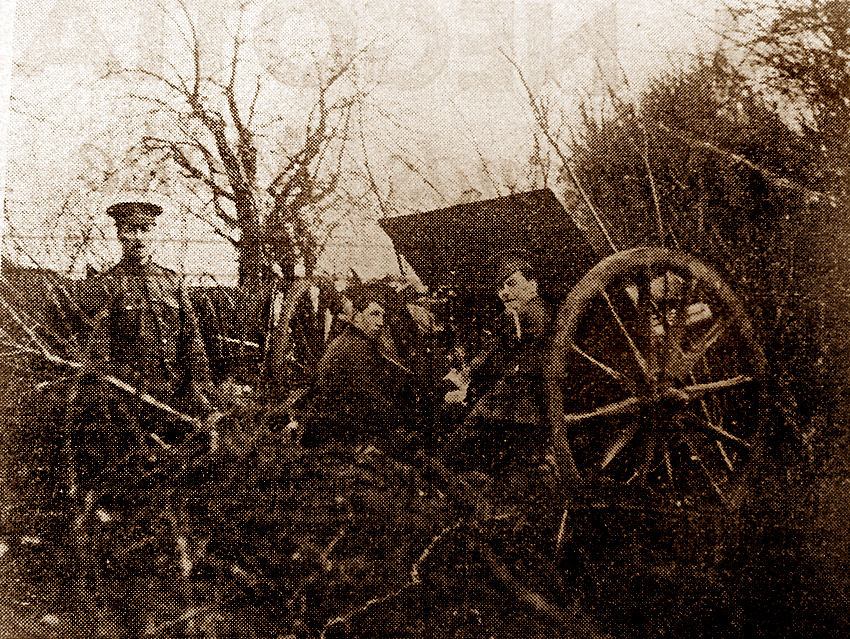
Among them was Mr W. W. Mason, by then sales manager for builder H. C. Janes Ltd and who was living at Fernleigh, Manton Drive, Luton. The Wednesday, October 5th, 1938, edition of the Beds & Herts Evening Telegraph published this picture of him helping to man a field gun at Laventie, near Lille in France, in 1914. The special significance of the 13-pounder QF (quick firing) artillery piece shown was that it had been the first gun to fire a British shell in anger in World War One.
It is just possible to make out the head of Bombardier Mason (centre) next to one of the gun wheels. The gun had fired the first shell at 11.20am on August 22nd, 1914, at Bray, near Binchy in Belgium, during the retreat from Mons.
As a pre-war soldier who had joined the Royal Horse Artillery as a trumpeter at the age of 14, Bombardier Mason had been serving in Ireland. At the outbreak of war he found himself as a 16-year-old with 'E' Battery in France.
He remembered that he and his comrades had been feted everywhere by the French people, who claimed their cap badges as souvenirs.
"We all thought the war would last only a short time," said Mr Mason. "Five minutes after we had gone into action we experienced our first taste of shell fire, and soon realised what we were in for."
Mr Mason served throughout the war, although he was severely wounded and on one occasion gassed. He was later transferred to the Army gymnastic staff, and at the end of the war became a warrant officer at Aldershot.
On leaving the Army in 1919 he was appointed physical training instructor to the Metropolitan Police, with more than 9,000 police recruits coming under his instruction during his time at Peel House in London.
While living at Bedford he joined the Janes firm, moving to live in Luton on his appointment as sales manager.
As for the gun, that too survived the war and is now in the care of the Imperial War Museum North at Manchester. Similar weapons are still used by the Royal Horse Artillery to fire salutes on ceremonial and royal occasions.